Routes · 7 min read
The Costa Blanca in winter by motorhome: what to do from November to February
Mild days, little rain and quiet roads. What the weather is really like, five trips from Alicante and how to sleep warm in a motorhome.
By Isaac Borrás ·
On this page
In winter, half of Europe has its motorhomes in storage. On the Costa Blanca it's the best time to travel: there's space everywhere, the roads are empty and you eat lunch in the sun.
We won't tell you it's summer all year round here. Nights are cool and some days it rains. Here's what the weather is really like, where to go from Alicante and how to sleep warm.
What the weather is really like
These are the climate normals from the AEMET weather station in Alicante (Spain's national weather service), based on data from 1981 to 2010:
- Highs: on average 20.5 °C in November, 17.7 °C in December, 17.0 °C in January and 17.6 °C in February.
- Lows: on average between 6.3 °C in January and 10.3 °C in November.
- Rain: 3 to 4 days a month with more than 1 mm.
- Sunshine: 164 to 181 hours a month, which is 5 to 6 hours a day.
- Frost: in the city, less than one day a month on average.
What that means for your trip: during the day you're in a T-shirt or a light jumper. At night it drops to 6 or 7 degrees and you switch the heating on. Inland, nights are colder than on the coast, so bring a proper coat if you're heading into the mountains.
One more thing changes: it gets dark early. Plan to drive in daylight and reach your overnight spot before sunset. It's easier and safer, especially on your first trip.
Five sunny trips from Alicante
You can do each one as a day trip or with one night away. Mix them as you like.
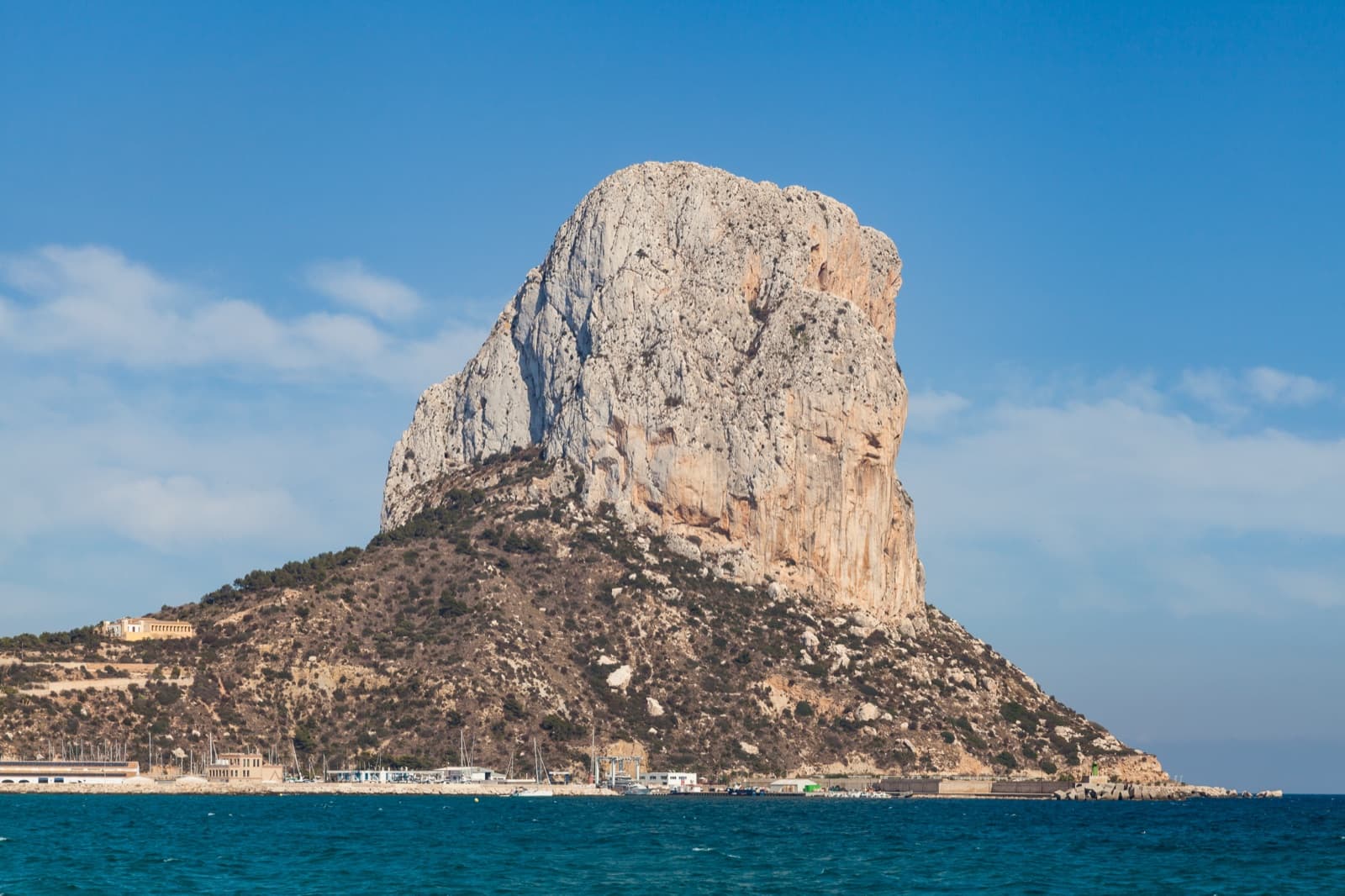
Calp and the Penyal d'Ifac
The Penyal d'Ifac is the rock you see in every photo of Calp. It rises 332 metres above the sea and has been a Natural Park since 1987. A footpath takes you to the top, going through the rock in a tunnel. Winter, with less heat and fewer people, is the best time to do it. Wear shoes with good grip.
Before you go, check the park's website in case a section is closed that day.
Elche and its Palm Grove
The Palm Grove of Elche has been a UNESCO World Heritage Site since 2000. It's an oasis of palm trees in the middle of the city, with gardens and paths you explore on foot. In summer the heat is fierce. In winter it's a pleasant walk at any time of day.
Park outside the centre and walk in. With a motorhome, the old streets of any town are easier on foot.
Altea and Guadalest
Altea gives you the white town by the sea: steep lanes, the church with the blue dome and views over the bay. Guadalest takes you inland, to a village on top of a rock, with its castle and views over the reservoir.
The road to Guadalest is winding. It isn't difficult, but in a 7-metre motorhome take it slowly. Go up in the morning and come down before dark.
Santa Pola and Tabarca Island
Santa Pola means harbour, salt flats and a seafront promenade. Boats leave from there all year round for Tabarca, the only inhabited island in the Valencia region. A calm winter day is perfect for crossing over, having lunch on the island and coming back.
Check the boat times before you go and pick a day when the sea is calm.
The Vall de Pop in blossom
If you're travelling in February, head up to the Marina Alta. The official Valencia region tourism website says the Vall de Pop is in blossom in February and March, with Xaló as the main village. It's fields, vineyards and small villages, with little traffic on weekdays.
For more ideas, have a look at our routes: they all start in Alicante and tell you where to stop.
Where to sleep in winter
First things first: parking is not camping. Spain's traffic authority (DGT) explains it in its motorhome instruction, PROT 2026/04: a motorhome can stop and park like any other vehicle, as long as it follows the signs and the rules of each town council. Camping is different: each council can ban it outside authorised areas.
In practice, you have three options:
- Campsites. Some campsites on the coast are open all year. You get electricity, showers and a laundry. Call ahead to check they're open and have a pitch.
- Motorhome service areas. Places designed for sleeping, emptying waste water and filling up with fresh water. Some are paid and some are free.
- Parking on the street. Only where it's allowed, and without putting out an awning, tables or chairs. Watch the signs: some towns restrict motorhome parking.
When you pick up the van, we'll share spots we know for the route you have in mind. And if you like, we'll put together a custom route for you, which is included: just ask whenever you want.
How to sleep warm and avoid damp
All our motorhomes and campervans have heating and hot water. At pick-up we take our time to show you how the heating and gas work, and how to avoid damp. These tips work best:
- Ventilate a little, even when it's cool. You breathe out moisture while you sleep. Leave a roof vent slightly open and condensation drops a lot.
- Dry clothes outside. One wet towel inside overnight covers the windows in droplets.
- Warm up before bed. Put the heating on a while before you go to sleep and turn it down for the night.
- Keep an eye on the gas. Heating uses more in winter. Check the level every day and don't leave it to the last minute.
- Park facing the morning sun. If you can, point the windscreen east. You'll wake up to a warm cab.
Why winter is cheaper
From November to February you're in low season, except for Christmas and long weekends, which have a seasonal surcharge. The price per night is the lowest of the year and there are more vans free, so choosing dates is easier. You can see it all on our prices page, night by night and by season.
If your dates are flexible, also check the last-minute deals: discounted gaps between rentals.
Flying in? Our base is 25 minutes from Alicante airport. On the airport page we explain how to get to us.
When you're ready, choose your motorhome and see which dates are still free.
Frequently asked questions
Is it too cold to sleep in a motorhome in Alicante in winter?
No. According to AEMET, the average low in Alicante in January is 6.3 °C, and there's hardly any frost in the city. With the motorhome's heating you'll sleep well. Inland it gets colder at night, so bring warm clothes if you're going into the mountains.
Can I sleep in the motorhome parked on the street?
It depends on each town council. The DGT says a motorhome can park like any other vehicle, following the signs and local by-laws. What a council can ban is camping outside authorised areas, so don't put out an awning, tables or chairs on the street.
Which days and at what time can I pick up the motorhome?
You can pick it up any day except Sunday, from 4 pm. Return is before 12 noon. You get it with a full tank and bring it back full.
Is there a deposit?
Yes. When you pick up the motorhome, a €900 deposit is required, which is returned if there are no incidents.