Tips · 4 min read
Rules for Driving Motorhomes
We're moving to the less exciting part of travelling in a motorhome: the rules. Yes, I know, it doesn't sound as fun as talking about routes or beaches, but it's
By Isaac — OneVan ·
Rules for Driving a Motorhome
We're moving to the less exciting part of travelling in a motorhome: the rules. Yes, I know, it doesn't sound as fun as talking about routes or beaches, but it's essential to have them clear before you hit the road. The good news is that they're quite straightforward and not complicated at all.
If you want to go straight to the official source, you can check the DGT website, where you'll find the detailed regulations to keep in mind.
But since you probably don't feel like reading legal texts, here's a practical and easy-to-understand explanation so you can travel with your OneVan motorhome without worries.
Regulations for Travelling in a Motorhome in Spain
First of all, you should know that motorhomes generally have the same traffic regulations as cars since they are vehicles with wheels. That means speed limits are the same: 120 km/h on motorways and dual carriageways, 90 km/h on conventional roads and 50 km/h in towns, although as you'll see there are some details to keep in mind.
That said, it's worth remembering that we're talking about longer and heavier vehicles, so although legally you can go 120 km/h, in practice it's better to take it easy, especially on curves, overtaking or if there's strong wind that could affect safe driving. Your safety and that of your loved ones always comes first.
As for passengers, everyone who appears in the vehicle's permit can travel, no more and no less. Also, although this is common sense, everyone must have their seatbelt fastened, both in the cabin and in the rear. If you're travelling with children, they must use the approved restraint systems corresponding to their age and weight, just like in a car.
The biggest challenge of driving a motorhome is its size.
It's not the same manoeuvring a four-metre car as a seven-metre vehicle.
That's why you need to pay special attention to height restriction signs that indicate the maximum height in tunnels, bridges or car parks, as well as width restrictions on narrow streets. You'll also notice that the turning radius is wider and that you'll need quite a bit more space to park. It's just a matter of getting used to it and driving with a little foresight, nothing more.
Differences Between Parking, Camping and Overnight Stays
One of the most common questions among those renting a motorhome for the first time is the difference between parking and camping. And here we need to be clear.
Parking is allowed anywhere there's a designated car park, just like with a car. You can stay inside the vehicle, eat or sleep, as long as you remain within the motorhome's perimeter.
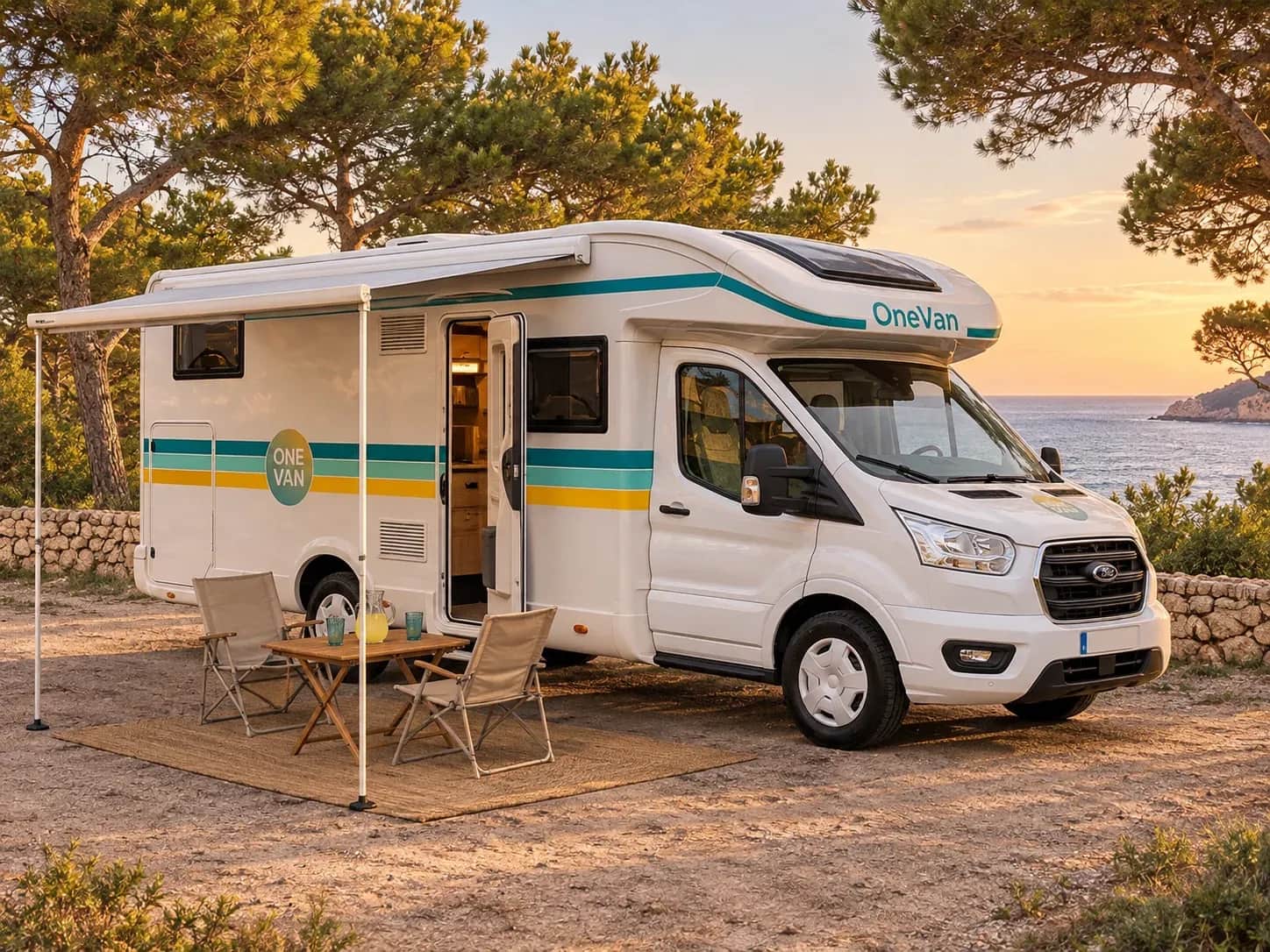
Camping, on the other hand, is different: deploying awnings, taking out tables and chairs, using levelling blocks or opening windows outwards.
All of that already counts as camping and can only be done at campsites or specific motorhome areas. Now then, let's be honest: are you going to get fined for having a window open?
To date, no OneVan customer has received a fine for that, but it never hurts to be cautious.
Other Common Questions When Driving a Motorhome
Do I need a special license to drive a motorhome?
With a conventional B license you can drive motorhomes up to 3,500 kg MMA (Maximum Authorised Mass). Most rental motorhomes fall into this category.
Can I drive on any road?
Yes, but you must pay attention to height, width and weight restrictions. Avoid narrow streets in historic city centres and always check the height restriction signs.
How much space do I need to park?
A motorhome usually measures between 6 and 7 metres long. You'll need at least 8-9 metres of space to park comfortably and be able to open the doors.
Can I sleep inside the motorhome parked on the street?
Yes, as long as you're correctly parked and don't deploy elements outside. It's not considered camping as long as you remain within the vehicle's perimeter.
How do I know if I can pass through a tunnel or car park?
Your motorhome's height is indicated in the vehicle's documentation. Note it down and always compare it with the maximum height signs (height restriction) before entering.
In short, the rules for driving a motorhome in Spain are not complicated and with common sense and a little attention, you can enjoy your trip with peace of mind.
At OneVan we want your experience to be safe and fun from the first kilometre, so you can focus on what matters: living the adventure of travelling in a motorhome.